Author: Daniel Dominguez

MMS • Daniel Dominguez
Anthropic has proposed a new transparency framework designed to address the growing need for accountability in the development of frontier AI models. This proposal focuses on the largest AI companies that are developing powerful AI models, distinguished by factors such as computing power, cost, evaluation performance, and annual R&D expenditures. The goal is to establish a set of standards that ensures safety, mitigates risks, and increases public visibility into the development and deployment of these advanced AI systems.
A central aspect of the framework is the implementation of Secure Development Frameworks (SDFs), which would require large AI companies to assess and mitigate potential catastrophic risks associated with their models. These risks include chemical, biological, and radiological hazards, as well as harms caused by misaligned model autonomy. The proposal outlines that these frameworks should not only address risk mitigation but also ensure the responsible handling of AI development processes.
One of the key requirements of the framework is public disclosure. Under the proposed regulations, AI companies would be mandated to make their SDFs publicly available through a registered website, offering transparency into their safety practices. This would allow researchers, governments, and the public to access important information about the models being deployed, ensuring that safety standards are being met and that any risks are properly managed. Additionally, companies would be required to publish system cards that provide a summary of the model’s testing procedures, evaluation results, and the mitigations implemented. This documentation would need to be updated whenever a model is revised or a new capability is added.
The framework also proposes that smaller developers and startups be exempt from these requirements. Instead, the regulations would apply to large-scale AI companies whose models have the potential to cause significant harm, such as those with substantial computing power or financial resources. The exemption is designed to avoid placing an undue burden on smaller companies while still focusing regulatory efforts on the largest players in the field.
Furthermore, the proposal includes specific provisions for enforcing compliance. It would be a legal violation for AI companies to provide false or misleading statements about their adherence to the framework, ensuring that whistleblower protections can be applied if necessary. The enforcement mechanism would allow the attorney general to pursue civil penalties for violations, helping to maintain the integrity of the system.
Community reactions reflect a mix of optimism, skepticism, and practical concerns with recent global discussions on AI regulation.
AI Expert Himanshu Kumar commented on X:
Isn’t fostering open-source AI development also crucial for safe innovation?
Meanwhile user Skeptical Observer commented:
Enforcement by whom? This feels very U.S.-centric. What about Chinese labs or others outside this scope? The whistleblower protections sound nice, but without global reach, it’s just a Band-Aid. Hope they clarify this at the AI Safety Summit!
Ultimately, the proposed transparency framework aims to strike a balance between ensuring AI safety and enabling continued innovation. While the framework sets minimum standards for transparency, it intentionally avoids being overly prescriptive, allowing the AI industry to adapt as the technology continues to evolve. By promoting transparency, the framework seeks to establish clear accountability for AI developers, helping policymakers and the public differentiate between responsible and irresponsible practices in the field. This could serve as a foundation for further regulation if needed, providing the evidence and insights necessary to determine if additional oversight is warranted as AI models advance.
MMS • Daniel Dominguez
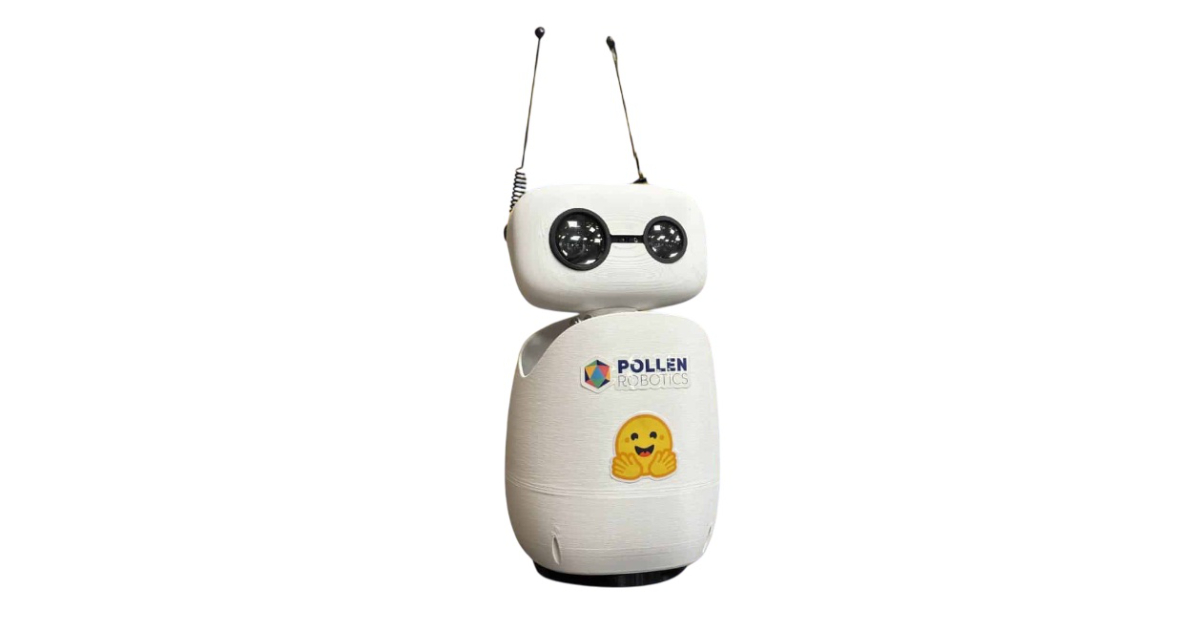
Hugging Face has launched its Reachy Mini robots, now available for order. Designed for AI developers, researchers, and enthusiasts, the robots offer an exciting opportunity to experiment with human-robot interaction and AI applications.
The Reachy Mini is compact, measuring 11 inches in height and weighing just 3.3 pounds. It comes as a kit that users can assemble themselves, fostering a deeper understanding of the robot’s mechanics. The robot features motorized head and body rotations, animated antennas for expressiveness, and multimodal sensing capabilities, including a camera, microphones, and speakers. These features enable rich AI-powered audio-visual interactions, making Reachy Mini suitable for a wide range of AI development and research tasks.
Reachy Mini is fully programmable in Python, with future support for JavaScript and Scratch. The robot integrates with the Hugging Face Hub, which gives users access to over 1.7 million AI models and more than 400,000 datasets. This integration allows users to build, test, and deploy custom AI applications on the robot, making it a versatile tool for AI development.
Both versions of Reachy Mini offer a range of capabilities, but the Wireless version includes onboard computing, wireless connectivity, and a battery, while the Lite version requires an external computing source. Regardless of the version, Reachy Mini is designed for accessibility and ease of use, making it ideal for AI enthusiasts, students, and researchers of all skill levels.
Hugging Face’s approach to Reachy Mini aligns with its commitment to open-source technology. The robot’s hardware, software, and simulation environments are all open-source, which means that users can extend, modify, and share their own robot behaviors. The community-driven approach encourages innovation and collaboration, with users able to contribute to the growing library of robot behaviors and features.
The community feedback reflects enthusiasm, curiosity, and constructive critique, with a focus on its affordability, open-source nature, and potential for AI and robotics development.
System design & AI architect Marcel Butucea commented:
Reachy Mini robot ships as a DIY kit & integrates w/ their AI model hub! Could this open-source approach, like Linux for robots, democratize robotics dev?
Meanwhile Clement Delangue, CEO of Hugging Face posted:
Everyone will be able to build all sorts of apps thanks to the integrations with Lerobot & Hugging Face.
The Reachy Mini Lite is expected to begin shipping in late summer 2025, with the Wireless version rolling out in batches later in the year. Hugging Face is focused on getting the robots into the hands of users quickly to gather feedback and continuously improve the product.
MMS • Daniel Dominguez
Anthropic has announced the launch of its Economic Futures Program, an initiative designed to address the economic impact of AI. With the growing influence of AI on global labor markets and productivity, the program aims to provide valuable insights and contribute to the development of strategies for managing AI’s economic shifts. This program extends Anthropic’s existing Economic Index, focusing on empirical research, data-driven policy development, and expanding economic measurement tools to better understand AI’s evolving role in the economy.
The program is structured around three core pillars. The first pillar, Research Grants, provides funding and resources to independent researchers studying AI’s economic effects. Grants will support investigations into areas such as labor market dynamics, productivity shifts, and new forms of value creation enabled by AI.
The second pillar, Evidence-Based Policy Development, focuses on creating opportunities for researchers, policymakers, and industry professionals to collaborate and evaluate policy proposals. Topics include labor transitions, fiscal policies, and innovation creation, with a focus on data-driven strategies to address AI’s impact on the workforce and broader economy.
The third pillar, Economic Measurement and Data, aims to expand the Anthropic Economic Index by creating one of the first longitudinal datasets on AI’s economic usage and its long-term effects. This will help track how AI adoption is transforming industries, job markets, and productivity levels. The goal is to create a robust data infrastructure that will support ongoing efforts to understand AI’s economic impact and help inform future research initiatives.
The program also plans to foster strategic partnerships with independent research institutions, providing resources such as API credits to assist in research. These partnerships will expand the ecosystem of research and policy analysis on AI’s economic implications. Institutions interested in collaborating with Anthropic are encouraged to submit proposals detailing their research efforts.
The need for such research is growing as AI’s role in the economy continues to expand. Policymakers and industry leaders are seeking reliable, real-time data to understand how AI is affecting the workforce, creating new job categories, and altering traditional productivity measures. The Economic Futures Program aims to fill this gap by supporting research that can help guide the development of policies that address the challenges and opportunities presented by AI.
The community comments reflect a mix of curiosity, concern, and cautious optimism about AI’s impact on the workforce. AI Educator Andres Franco commented on X:
Well, at least someone is looking into it. Most people don’t realize how dangerous this AI boom is for the job market in its current state.
Meanwhile user @bryanstrummer shared:
AI’s already reshaping jobs – hope this program delivers actual workforce solutions, not just another think tank writing reports about the ‘future of work’. We’ve seen how that movie ends.
Looking ahead, the program seeks to drive an ongoing conversation about AI’s role in the economy, ensuring that society can effectively manage its economic impacts. As AI continues to change the way we work and interact with the world, initiatives like the Economic Futures Program will play a key role in shaping a sustainable, AI-enabled economy.
MMS • Daniel Dominguez

Anthropic has upgraded Claude with new app-building capabilities, allowing users to create, host, and share AI applications directly from text prompts. This functionality, known as Artifacts, enables users to build functional tools like data analyzers, flashcard generators, or study aids by simply describing their ideas. Claude handles the coding behind the scenes, enabling individuals without programming skills to create sophisticated applications.
One of the most notable features of this upgrade is how it shifts the operational costs to end users. When users authenticate with their Claude credentials, the platform ensures that creators don’t have to manage API keys or pay for others’ usage. This means creators can focus on building and sharing their apps without worrying about infrastructure or costs.
Artifacts are now organized into a dedicated workspace, making it easier for users to manage and access their creations. This marks a major shift in how AI interacts with users, moving from simple conversational tasks to enabling the development of fully functional applications with ease.
Anthropic’s push into vibe coding is one of the driving forces behind this upgrade. While Claude’s models have long been a favorite for developers working on coding tasks, this new functionality extends the platform’s appeal to a broader audience.
The shift also represents a growing trend in the AI industry towards democratizing application creation. With this upgrade, Anthropic challenges other AI platforms like OpenAI’s Canvas, which provides similar editing tools but lacks the emphasis on creating shareable, interactive applications. Claude’s focus on seamless app-building also adds a layer of competition in the broader space of AI-driven tools for both developers and non-developers.
Users in X have noted the practical benefits, such as the ability to share apps where usage is counted against the viewer’s subscription, not the creator’s, fostering a cost-effective and collaborative environment.
AI Developer Chris O’Halloran shared:
Wow, I think it will be really for micro apps that are currently being built in v0, lovable etc. Now just need to add a way for creators to get paid when others use Claude.
While Developer Hassan Laasri commented:
Really excited about these updates, especially the dedicated artifacts space. It’s a great step toward making Claude a more interactive workspace. One thing that would make it even more powerful is project-based organization to reduce clutter. It would also be great to have more control over versions, like cleaning up intermediate artifacts I don’t need.
As more users begin to explore the potential of AI-powered apps, this transformation raises important questions about the future of software development. Tools like Claude’s Artifacts are helping to redefine the landscape by providing simple, effective ways for anyone to create, share, and collaborate with AI-powered applications.
MMS • Daniel Dominguez

Midjourney has launched its first video generation V1 model, a web-based tool that allows users to animate still images into 5-second video clips. This new model marks a significant step toward the company’s broader vision of real-time open-world simulations, which will require the integration of image, video, and 3D models to create dynamic, interactive environments.
V1 works by enabling users to animate images through two options: an automatic animation setting, which generates a motion prompt for basic movement, and a manual animation feature, where users can describe specific actions and camera movements. The system is designed to work with images generated by Midjourney as well as those uploaded from external sources, offering flexibility in video creation.
The model also introduces a unique workflow for animating images. Users can drag images into the prompt bar and mark them as the starting frame, then apply a motion prompt to animate them. V1 includes two settings for motion: low motion, which is suitable for ambient scenes with slow or minimal movement, and high motion, which is better for fast-paced scenes with active camera and subject movement. However, high motion can sometimes result in unintended glitches or errors.
When compared to other AI video generation tools currently on the market, V1 offers a distinct approach. Unlike more established platforms like Runway or DeepBrain, which focus on highly polished, pre-built video assets with complex editing features and audio integration, V1 prioritizes the animation of static images within a specific aesthetic that aligns with Midjourney’s popular image models. While competitors like Veo 3 are known for their real-time video creation with full audio integration and high-quality motion capture, V1 sticks to simpler video outputs with limited motion capabilities, focusing primarily on image-to-video transformations.
Midjourney’s V1 Video Model launch has sparked excitement across creative communities, with users praising its stunning visual consistency and artistic flair, often comparing it favorably to competitors.
AI Artist Koldo Huici commented on X:
Creating animations used to take 3 hours in After Effects. Now with Midjourney, I do it in 3 minutes! I’ll tell you how ridiculously easy it is.
While Gen AI expert Everett World posted:
It’s fantastic to have a new video model, especially since it’s made by Midjourney – it opens up new, unexpected possibilities. Some generations look incredibly natural (anime looks great!). Even though it’s only 480p, I think we’re seeing interesting developments in the AI video space, and I’m so glad we can have fun with this model!
Midjourney plans to continue evolving its video capabilities, with an eye on making real-time, open-world simulations a reality in the near future. For now, the V1 model is available for web use only, and the company is monitoring usage closely to ensure that it can scale its infrastructure to meet demand.
This launch comes in the wake of ongoing legal challenges for the company, including a recent lawsuit from Disney and Universal over alleged copyright infringement. Despite these challenges, Midjourney is focusing on expanding its technology, with V1 seen as a significant step toward achieving the company’s vision for immersive, interactive digital environments.
MMS • Daniel Dominguez
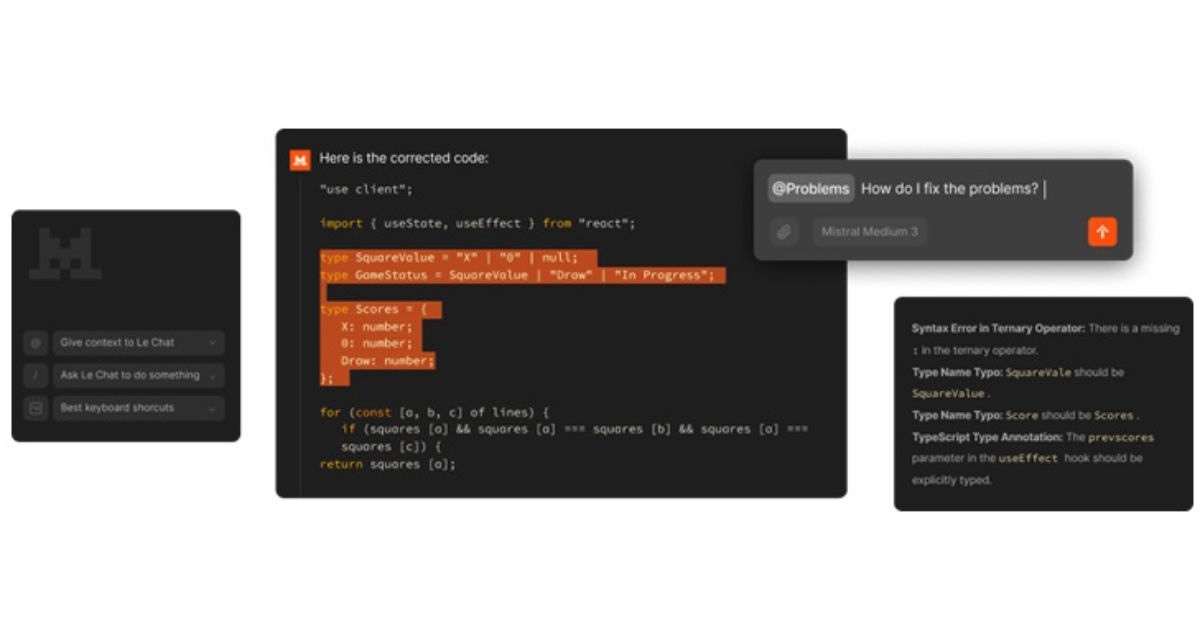
Mistral has introduced Mistral Code, a new AI-powered development tool aimed at improving the efficiency and accuracy of coding workflows. Mistral Code utilizes advanced AI models to offer developers intelligent code completion, real-time suggestions, and the capability to interact with the codebase using natural language. By understanding the structure and relationships within a project, Mistral Code delivers context-aware support for a range of tasks, helping developers write and optimize code more effectively.
Mistral Code can assist with real-time code completion, offering suggestions for code as developers type, which helps reduce errors and speed up the development process. It also identifies syntax and logical errors, providing suggestions for correcting them, which minimizes the time spent on debugging.
In addition to its code completion and debugging capabilities, Mistral Code also generates code documentation automatically. This includes inline comments and API documentation, improving the maintainability of the code and making it easier for teams to collaborate. The tool can even generate unit and system tests to ensure the code produced is fully functional, reducing the burden on developers to manually create tests.
Mistral Code is also designed to assist with code migration. It can generate code snippets in target languages, allowing teams to adapt their existing codebases to new frameworks or languages with ease. Furthermore, the platform analyzes code performance, identifying bottlenecks and offering suggestions for optimizing speed and efficiency.
The AI models behind Mistral Code, such as Codestral and Devstral, are built to be fully customizable and tunable, allowing developers to adjust the models to fit the specific needs of their codebase. This flexibility enables the platform to integrate into different development environments, whether for individual developers or larger teams. The platform supports enterprise-grade features, including team management, detailed analytics, and deployment flexibility.
Community feedback on Mistral’s code is largely positive, with developers praising its efficient, clean code generation across languages. AI and Data specialist Shubham Sharma commented:
Mistral Code revolutionizes enterprise AI development—delivering frontier-grade coding models directly into secure, compliant workflows. No more POC purgatory.
And Fahim in Tech user shared:
If your team needs an AI assistant that understands your code, respects your security, and actually helps ship features not just autocomplete lines Mistral Code might be your new favourite tool.
Mistral Code is integrated directly into JetBrains and VS Code, which simplifies the workflow by allowing developers to stay within their existing development environment. While tools like Windsurf, Cursor, and Copilot offer code completion and assistance, Mistral Code allows natural language interactions with the codebase and offers customizable AI models.
MMS • Daniel Dominguez
At Build 2025, Microsoft announced updates aimed at extending the use of AI agents across Windows, GitHub, Azure, and Microsoft 365. The releases align with the company’s vision for an Agentic Web, where AI agents function more independently across platforms and services.
GitHub Copilot Adds Autonomous Coding Agent
Microsoft announced an upgrade to GitHub Copilot that transforms it from a code suggestion tool into an autonomous agent. The new Copilot agent can be assigned GitHub issues, generate pull requests, and revise code based on user feedback. It works asynchronously by creating isolated development environments, using reasoning to analyze code and propose changes. Security features include respect for branch protections and requirements for human approval before triggering automated workflows. The agent is available for GitHub Copilot Enterprise and Pro+ subscribers.
Windows 11 Integrates Model Context Protocol
Microsoft is integrating the Model Context Protocol (MCP), developed by Anthropic, directly into Windows 11. This allows AI agents to interact with native applications, system services, and external tools. Additionally, Microsoft launched Windows AI Foundry, a framework for running AI models locally on Windows devices. It supports both open-source and proprietary models across CPUs, GPUs, and NPUs, and is intended for use on Copilot+ PCs. These tools are designed to facilitate local AI processing for improved speed and privacy.
Copilot Tuning Offers Low-Code Customization
Microsoft 365 now includes a feature called Copilot Tuning, which allows organizations to tailor AI agents to their internal data and processes using a low-code interface. Built into Copilot Studio, the feature lets users fine-tune models without requiring technical expertise. It supports custom agents built on organizational knowledge, language, and workflows. Copilot Tuning will include prebuilt templates for tasks such as expert Q&A, document generation, and summarization.
Azure AI Foundry Expands Agent Tools
Azure AI Foundry introduced updates aimed at simplifying the development and management of AI agents. The platform now supports models like Grok 3 from xAI, Flux Pro 1.1 from Black Forest Labs, and over 10,000 open-source models via Hugging Face. Developers can fine-tune these models using techniques such as LoRA, QLoRA, and DPO. Foundry Agent Service is now generally available, offering ready-to-use components for secure AI agent creation. Additional tools include a model leaderboard and a router that selects the most appropriate model per task.
Microsoft Discovery Targets Scientific Research
Microsoft unveiled a new platform called Microsoft Discovery, aimed at supporting scientific research using AI agents. The platform is designed to automate steps throughout the research lifecycle, from hypothesis generation to data analysis. Discovery uses modular components and integrates with domain-specific data sources and plugins. It relies on a graph-based knowledge engine to map and analyze relationships across scientific data sets, enabling collaboration between researchers and AI agents on routine and analytical tasks.
Discussions about Microsoft Build 2025 reflect a mix of excitement, skepticism, and frustration, largely centered on the event’s AI-heavy focus, technical demos, and disruptions.
In X, developers expressed excitement about GitHub Copilot’s new agent features, saying
They were thrilled about how it streamlines debugging and coding tasks.
A user on r/AIAssisted was enthusiastic about the agentic web’s potential, particularly praising the revamped GitHub Copilot as an asynchronous coding agent, saying:
It could transform how developers handle tasks like bug fixes, and appreciated Microsoft’s open-sourcing of Copilot Chat in VS Code for collaborative development.
On r/dotnet, a user expressed disappointment, calling Build 2025 noting that even prominent presenters struggled with AI features, and felt Microsoft was overly focused on AI at the expense of other .NET advancements
The era of failed AI demos
Meanwhile Christiaan Brinkhoff, Product and Community Leader for Windows Cloud & AI shared:
This is just the beginning… The future of #AI is being built right now across the cloud, on the edge and on Windows. From working with Windows 11 on the client to #Windows365 in the cloud, we’re building to support a broad range of scenarios, from AI development to core IT workflows, all with a security-first mindset.
In summary, Microsoft’s updates reflect a broader push to embed AI agents across its platforms while supporting open standards and local execution. The company aims to make AI development more accessible and modular, with a focus on practical integration over hype.
MMS • Daniel Dominguez
Mistral AI announced the release of Devstral, a new open-source large language model developed in collaboration with All Hands AI. Devstral is aimed at improving the automation of software engineering workflows, particularly in complex coding environments that require reasoning across multiple files and components. Unlike models optimized for isolated tasks such as code completion or function generation, Devstral is designed to tackle real-world programming problems by leveraging code agent frameworks and operating across entire repositories.
Devstral is part of a new class of agentic language models, which are designed not just to generate code, but to take contextual actions based on specific tasks. This agentic structure allows the model to perform iterative modifications across multiple files, conduct explorations of the codebase, and propose bug fixes or new features with minimal human intervention. These capabilities are aligned with the demands of modern software engineering, where understanding project structure and dependencies is as important as writing syntactically correct code.
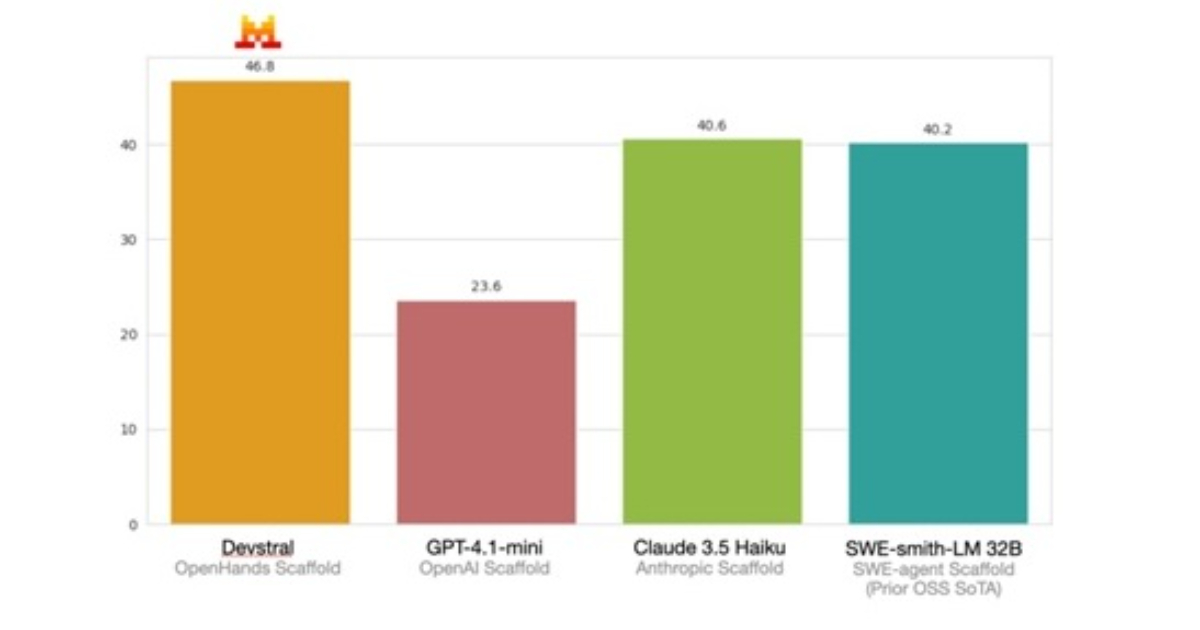
According to Mistral’s internal evaluations, Devstral achieves a performance score of 46.8% on SWE-Bench Verified, a benchmark composed of 500 manually screened GitHub issues. This score places it ahead of previously published open-source models, surpassing them by over six percentage points. The benchmark tests not only whether models can generate valid code but whether that code actually resolves a documented issue in a real project. When compared on the same OpenHands framework, Devstral outperforms significantly larger models such as Deepseek-V3-0324, which has 671 billion parameters, and Qwen3 232B-A22B, highlighting the model’s efficiency.
Devstral was fine-tuned from the Mistral Small 3.1 base model. Before training, the vision encoder was removed, resulting in a fully text-based model optimized for code understanding and generation. It supports a long context window of up to 128,000 tokens, allowing it to ingest large codebases or extended conversations in a single pass. With a parameter size of 24 billion, Devstral is also relatively lightweight and accessible for developers and researchers. The model can run locally on a consumer-grade GPU such as the NVIDIA RTX 4090, or on Apple Silicon devices with 32GB of RAM. This lowers the barrier to entry for teams or individuals working in constrained environments or handling sensitive codebases.
Mistral has made Devstral available under the permissive Apache 2.0 license, which allows both commercial and non-commercial use, as well as modifications and redistribution. The model can be downloaded through various platforms including Hugging Face, LM Studio, Ollama, and Kaggle. It is also accessible via Mistral’s own API under the identifier devstral-small-2505.
Community feedback reflects a mix of excitement and critical evaluation. Product Builder, Nayak Satya commented:
Another promising enhancement from Mistral. This company is silently building some great additions for AI space. Europe is not far behind in AI when Mistral stands tall. Meantime can it be added inside VS studio or any modern IDE’S folks?
On Reddit’s r/LocalLLaMA, users praised Devstral’s performance, user Coding9 posted:
It works in Cline with a simple task. I can’t believe it. Was never able to get another local one to work. I will try some more tasks that are more difficult soon!
Although Devstral is released as a research preview, its deployment marks a step forward in the practical application of LLMs to real-world software engineering. Mistral has indicated that a larger version of the model is already in development, with more advanced capabilities expected in upcoming releases. The company is inviting feedback from the developer community to further refine the model and its integration into software tooling ecosystems.
MMS • Daniel Dominguez
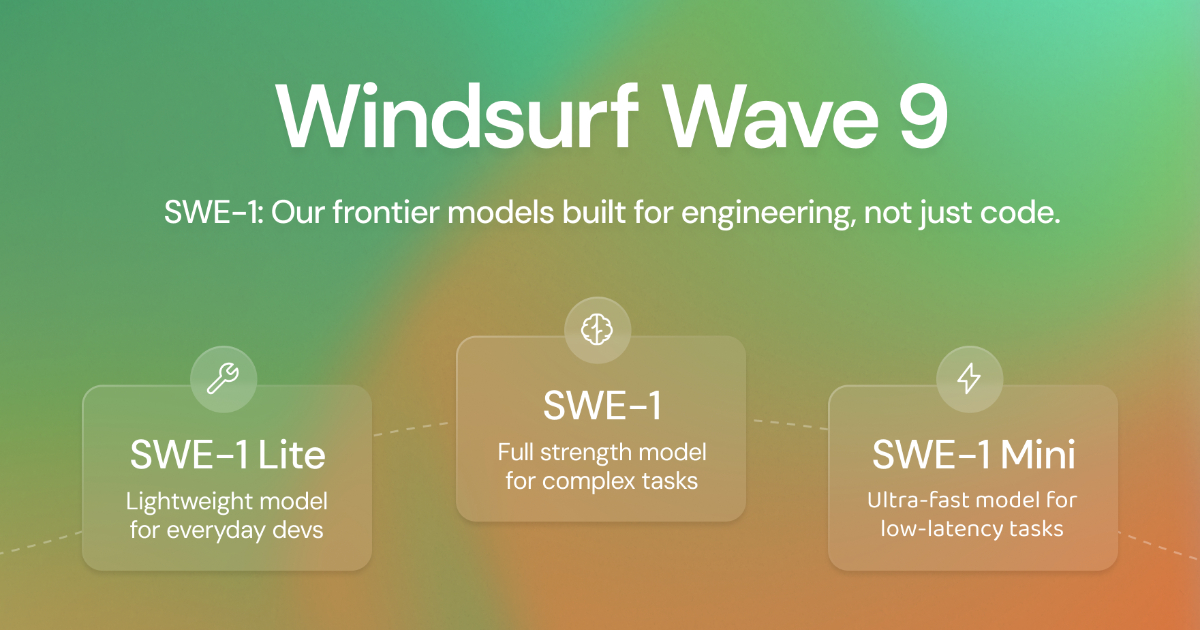
Windsurf has introduced its first set of SWE-1 models, aimed at supporting the full range of software engineering tasks, not limited to code generation. The lineup consists of three models SWE-1, SWE-1-lite, and SWE-1-mini, each designed for specific scenarios.
SWE-1 is focused on tool-call reasoning and is reported to perform similarly to Claude 3.5 Sonnet, while being more cost-efficient to operate. SWE-1-lite, which replaces the earlier Cascade Base model, offers improved quality and is accessible without restrictions to all users. SWE-1-mini is a compact, high-speed model that enables passive prediction features in the Windsurf Tab environment.
The SWE models are designed to address limitations in existing coding models by introducing flow awareness, a framework that enables models to reason over long-running, multi-surface engineering tasks with incomplete or evolving states. The models are trained on user interactions from Windsurf’s own editor and incorporate contextual awareness from terminals, browsers, and user feedback loops.
Windsurf evaluated the performance of SWE-1 through both offline benchmarks and blind production experiments. The benchmarks included tasks such as continuing partially completed development sessions and completing engineering goals end-to-end. In both cases, SWE-1 showed performance close to current frontier foundation models, and superior to open-weight and mid-sized alternatives.
Production experiments used anonymized model testing to compare SWE-1’s contributions in real-world use cases. Metrics such as daily lines of code accepted by users and edit contribution rates showed that SWE-1 is actively used and retained by developers. SWE-1-lite and SWE-1-mini were developed using similar methodologies, with lite aimed at mid-tier performance and mini tuned for latency-sensitive tasks.
All models are built around the concept of a shared timeline, which allows users and the AI to operate together in a collaborative flow. Windsurf plans to expand this approach and refine the SWE model family by leveraging data generated through its integrated development environment.
Initial community reactions to the SWE-1 model family highlight interest in its broader approach to software engineering tasks beyond coding. Developers have noted the usefulness of SWE-1’s tool-call reasoning and its ability to handle incomplete workflows across different development environments.
Web and app developer Jordan Weinstein shared:
Super impressive so far. Though when testing supabase MCP with SWE1 it errors in Cascade. Lite does not.
And Technical Leader Leonardo Gonzalez commented:
Most AI coding assistants miss 80% of what developers actually do. SWE-1 changes the game.
The release coincides with OpenAI’s acquisition of Windsurf, a move intended to strengthen its presence in the growing market for AI-powered software engineering tools, where competitors such as Anthropic’s Claude and Microsoft’s GitHub Copilot have established a strong foothold. OpenAI is expected to integrate Windsurf’s engineering-focused AI capabilities into its own ecosystem, including platforms like ChatGPT and Codex, further expanding its presence in software development tools.
MMS • Daniel Dominguez
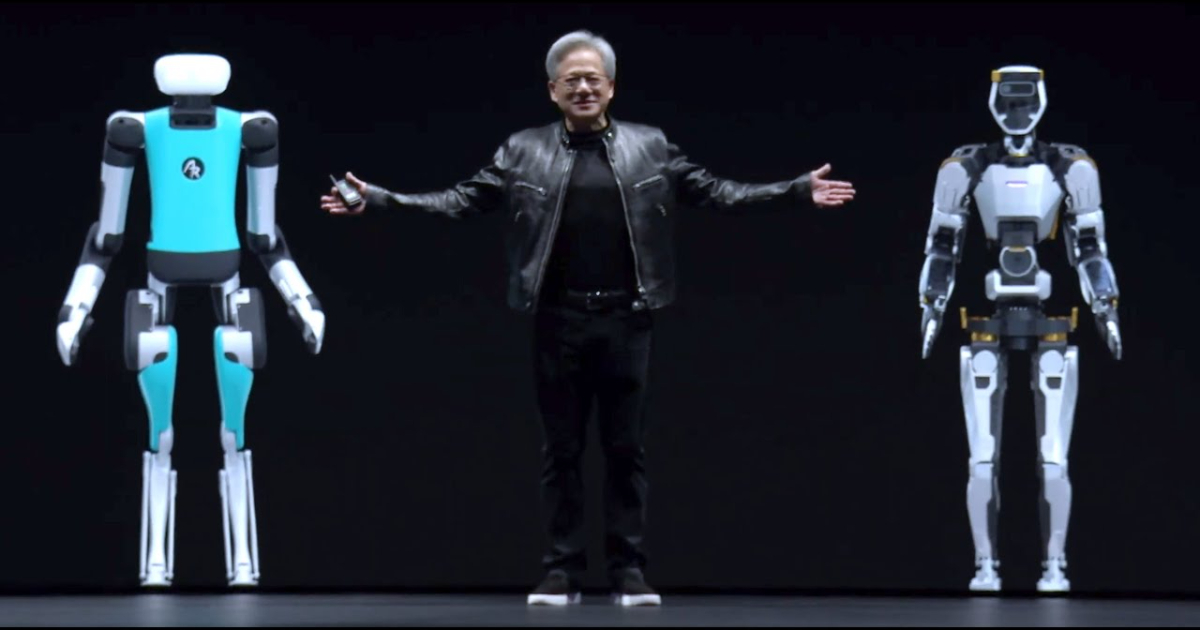
Nvidia presented a range of new technologies at its GTC 2025 event, focusing on advancements in GPUs, AI infrastructure, robotics, and quantum computing. The company introduced the GeForce RTX 5090, a graphics card built on the Blackwell architecture, featuring improvements in energy efficiency, size reduction, and AI-assisted rendering capabilities. Nvidia highlighted the increasing role of AI in real-time, path-traced rendering and GPU performance optimization.
In the data center sector, Nvidia announced the Blackwell Ultra GB300 family of GPUs, designed to enhance AI inference efficiency with 1.5 times the memory capacity of previous models. The company also introduced MVLink, a high-speed interconnect technology that enables faster GPU communication, and Nvidia Dynamo, an AI data center operating system aimed at improving management and efficiency. The DGX Station, a computing platform for AI workloads, was also unveiled to support enterprise AI development.
Nvidia’s automotive division revealed a partnership with General Motors to develop AI-powered self-driving vehicles. The company stated that all software components involved in the project have undergone rigorous safety assessments. Additionally, Nvidia introduced Halos, an AI-powered safety system for autonomous vehicles, integrating hardware, software, and AI-based decision-making.
In robotics, Nvidia introduced the Isaac GR00T N1, an open-source humanoid reasoning model developed in collaboration with Google DeepMind and Disney Research. The Newton physics engine, also open-source, was announced to enhance robotics training by simulating real-world physics for AI-driven robots. Nvidia also expanded its Omniverse platform for physical AI applications with the launch of Cosmos, a generative model aimed at improving AI-driven world simulation and interaction.
The company announced new AI models under the Llama Nemotron family, designed for reasoning-based AI agents. These models are optimized for enterprises looking to deploy AI agents that can work autonomously or collaboratively. Nvidia stated that members of the Nvidia Developer Program could access Llama Nemotron for development, testing, and research.
Nvidia revealed its latest advancements in quantum computing, including the launch of the Nvidia Accelerated Quantum Research Center in Boston. The company is collaborating with Harvard and MIT on quantum computing initiatives. During the conference, Nvidia hosted Quantum Day, where CEO Jensen Huang discussed the evolving role of quantum computing and acknowledged previous underestimations of its development timeline.
The company introduced a roadmap for future GPUs, including the Vera Rubin GPU, set for release in 2026, followed by Rubin Ultra NVL576 in 2027, which is projected to deliver 15 exaflops of computing power. Nvidia also announced the Feynman GPU, scheduled for 2028, designed to advance AI workloads with enhanced memory and performance capabilities.
Following the conference, online discussions reflected various perspectives on Nvidia’s announcements. Many users expressed interest in the concept of physical AI and its potential applications.
AI expert Armughan Ahmad shared:
AI is shifting from simple chat assistants to autonomous agents that execute work on our behalf.
While AI strategist Vivi Linsi commented:
With the arrival of agentic and physical AI, AI has developed from talking to Doing – are you ready?
Nvidia’s announcements at GTC 2025 highlight the company’s continued investment in AI, data centers, robotics, and quantum computing, positioning itself at the forefront of next-generation computing infrastructure.